


[By Al Erisman, 2020]
Abstract
King David made a profound statement about Godly leadership near the end of his life, prefacing it with a strong claim that this idea was not his, but was given to him by God. The statement focused on two leadership elements: shining a light on what is ahead, and supporting growth in others. Both elements are challenging for a leader today. Developing a clear and compelling vision is confounded by technology and other complexity factors, making it difficult to see ahead clearly in the presence of uncertainty. Seeking growth in others requires the leader to set aside his or her ego – leadership is not about the leader. The Bible has much more to say about leadership than this, but these two foundational elements are the anchor for practices needed for today’s leaders. We consider some examples – people in modern leadership roles who navigate these things well and poorly.1
Leadership is so vital in this day of leader isolation, shifting cultures, and changing environments. Perhaps that is why there are so many books on leadership. While the Bible has a great deal to say about leadership, does it provide clear insight on what Godly leadership looks like? Interestingly, near the end of the life of one of the great biblical leaders, King David reflected on what Godly leadership looks like. Poetic in its statement, David said, “When one rules justly over men, ruling in the fear of God, he dawns on them like the morning light, like the sun shining forth on a cloudless morning, like rain that makes grass to sprout from the earth” (2 Samuel 23: 3b-4 ESV). David not only made this statement, but he made a concerted effort to argue that this was not his idea, but it came from God. Here is how he set up his insight:
Now these are the last words of David: The oracle of David, son of Jesse, the oracle of the man whom God exalted, the anointed of the God of Jacob, the favorite of the Strong One of Israel: The spirit of the Lord speaks through me, his word is upon my tongue. The God of Israel has spoken, the Rock of Israel has said to me. (2 Samuel 23:1-3a NRSV)
His justification for making the statement is longer than the statement itself! David wanted to make sure we all understood the importance of what he said and the authority behind the statement.
But what is he really saying about leadership? It starts with the light of the sun, a source rooted in God’s creation. This light representing Godly leadership suggests two things. First, a Godly leader brings light to the direction, speaking truth clearly, showing the way. The morning light and the sun speak to this. Second, the Godly leader nurtures growth in others. Not only does he or she bring warmth to the soil, which enables growth, but that work is rewarded by the fulfillment of that growth, “like grass sprouting from the earth.”
Godly Leadership Defined
G odly leadership is not about the leader, but about what that leadership means in the lives of others. More recently, Max DePree, former Chairman and CEO of Herman Miller Furniture and a member of the Fortune Business Hall of Fame, wrote this definition of leadership: “The first responsibility of a leader is to define reality. The last is to say thank you. In between the two, the leader must become a servant and a debtor.”2
While DePree did not reference David’s statement, there is a strong parallel. Defining reality is like shining light on the path, showing the direction. Being a servant and a debtor produces growth in others as it gives accountability and responsibility to those doing the work.
Neither part is easy. First, how does the leader know and understand reality? Many leaders would rather avoid what is really happening. A Godly leader will look squarely at the truth. But what is the truth? In an age of misinformation, the leader must sort through and understand what is real.
Particularly in an age of technology, leaders will struggle with defining reality for areas where they have little expertise. Gaining a clear understanding is required, and challenging.
Second, fostering growth in others is also difficult when, for so many, leadership is about the leader. What are the requirements on a leader to create growth in others? Sometimes this means stepping aside to allow others to grow. It means delegating. And it leads to growth in the person doing the work. Hence changes in the lives of others is an essential outcome of leadership.
For the Christian leader, it is very clear that leadership takes place in the context of God working his sovereign will. We are called to fully engage in our work, but also to recognize his authority. This does not give us the opportunity to “let go and let God,” nor does it give us the right to believe it is all up to us. The Scripture reminds us of the tension between human effort and seeking God in the context of a sickness for King Asa: “In the thirty-ninth year of his reign Asa was diseased in his feet, and his disease became severe. Yet even in his disease he did not seek the Lord, but sought help from physicians” (2 Chronicles 16:12). Rather than seeking help from physicians and at the same time seeking God, he only sought help from physicians. Let us look more carefully at these two elements of leadership: shining a light on the path ahead, and the meaning of bringing growth in others.
Shining The Light
S ome of the factors of seeing clearly ahead include facing reality (avoiding our own personal desires and ignoring bad news), dealing with technology (where we may not understand the impact), navigating complexity (details that matter that we don’t understand), and dealing with complex problems where competing demands must be resolved. All of these require a posture of humility.
Facing Reality
In order to shine the light on the direction forward, the leader must assess the path. As part of this assessment, it would seem that leaders would want to face reality, to find the best path forward for the organization. Some will look away from truths to find what they believe will be best for them, supporting what they want to hear.
When Rehoboam took the throne following his father Solomon, he demonstrated the leadership failure of seeking his own good, obscuring the harder, better path. The assembly of Israel went to him with this message, “Your father put a heavy yoke on us, but now lighten the harsh labor and the heavy yoke he put on us, and we will serve you” (2 Kings 12:4). Rehoboam asked for three days to consider this advice, and so he went for a second opinion. But when the advice was confirmed, he “rejected the advice the elders gave him and consulted the young men who had grown up with him” (2 Kings 12:8). This time he seemed to get the answer he was looking for when they told him, “…tell them, ‘My little finger is thicker than my father’s waist. My father laid on you a heavy yoke, and I will make it even heavier. My father scourged you with whips, and I will scourge you with scorpions’” (2 Kings 12:10b-11). He took the advice he wanted. His ego was stroked, but he lost the kingdom: “So Israel has been in rebellion against the house of David to this day” (2 Kings 12:19).3 His vision of the future was distorted by personal desires for power.
Ken Lay, onetime leader of Enron, was a modern-day model of this same behavior. Sherron Watkins discovered what was going on in the finances at the company in 2001, and she sent Ken an anonymous letter describing what she found. But at a meeting the next day, Ken said nothing about the letter but did invite people to come see him or his HR leader, Cindy Olson, if there was a concern. When Sherron set up a meeting with Cindy that same day, Cindy said, “Ken gravitates toward good news. He probably showed this to Rick Causey, the chief accounting officer, and to Andy [CFO at Enron], and they said there is no basis for concern. So he just threw it away. For him the issue is resolved.”4 By the end of 2001, Enron, the once darling of Wall Street, had totally collapsed. Sherron’s role became known only later, when she was identified as the Enron whistleblower, and later was one of Time magazine’s persons of the year in 2002.
Issues of importance don’t go away or get better because they are uncomfortable. When Jesus said, “I am the way, the truth, and the life,” (John 14:6), we tend to reduce his statement to truth about spiritual things. My mentor, Al Greene, used to remind me, “When Jesus said ‘I am truth,’ he was speaking of the source of truth about all things. ‘In him, all things hold together’ (Colossians 1:17). So we should be always seeking the truth.”5
Facing hard truth was illustrated by Alan Mullaly. When the Ford CEO was asked how he dealt with bad news, he replied, “There is no bad news. It is just the way it is. There is a status, and you must know what the status is.”6 Bill Pollard, former CEO of ServiceMaster, reminds us of the fundamental importance of seeking truth by the leader: “There is an awesome responsibility in leadership….A leader has only one choice to make, to lead or mislead.”7
A good leader must clearly face reality, especially when it is uncomfortable.
The Technology Factor
Facing reality becomes even more challenging in this fast-paced, complex age of technology, where a leader may not understand reality for many reasons.First, in an age of misinformation, not all sources (articles, videos, deep fakes) convey reality. What information should be trusted?
Second, technology often has unintended consequences. When technology is used in a product or process, it is easy to see what it can accomplish, but less easy to see how it can correspondingly be misused or have unintended consequences. Edward Tenner has a collection of studies from 20 years ago, showing how good technology intended to accomplish one good objective can lead to accomplishing many other things with difficult consequences.8 As one illustration, he shows that protective football equipment, designed to make the players safer, has in reality changed the nature of the game and made the players less safe. Technology will be a part of the solution to a problem, and a part of creating a different problem. While we implement the first, we must be vigilant about the second. Erisman and Parker commented, “We need to be vigilant and forward looking as we roll out the technologies, but often our culture of short-term thinking and immediate gratification overrides our best intentions.”9 Few leaders are prepared to even ask the right questions, let alone understand these implications on their own.
A Godly leader brings light to the direction, speaking truth clearly, showing the way. The Godly leader nurtures growth in others.
Third, leaders confronted with cost pressures often don’t understand the reasons for delays in projects. Is the project “good enough;” is the engineer trying to simply continue to improve the technology, or is there a true safety or performance issue? Areas involving high risk, whether it is hospitals, airplane design, or pharmaceutical drug development are all fraught with these issues. Again, expert advice is required to know the difference. What is a leader to do in the face of technological change and uncertainty, where the leader is not the technology expert? This is a much bigger and longer discussion, developed in more detail elsewhere, where we draw on insights from Scripture and management lessons.10 Here are some general principles:
- What did not work effectively last year has little bearing on what might work effectively this year because of the pace of change.
- One must constantly ask the question: what might be possible in light of new technology?
- Be willing to engage in the uncomfortable conversations with those who better understand the technology and who challenge your assumptions.
- Don’t stop with what the technology makes possible. Try to explore what problems the technology could create as well (the unintended consequences)
Navigating Complexity
How does a leader develop the ability to overcome personal bias, to have the confidence to trust differing views, and to see reality in this ever more complex world? This requires addressing two different issues: getting individual facts straight, and understanding how different areas of expertise come together.
One senior leader the author has conversation with was General Peter Pace, former Chairman of the Joint-Chiefs of Staff. He was asked by the author how he could point the way when the details of the strategy that came from the top and the way it was carried out depended on things only known by those on the ground. In response he said,
I like to listen as much as I can. When I come into a new organization, I spend as much time as I can just talking to folks about what’s going right and what’s going wrong. Inside the military, there is always a senior enlisted person whom you can talk with to find out their perspective and get their guidance on whatever is happening. I gather senior leaders’ perspectives. Then I can put together my own thoughts of what I heard and make decisions. When we get together I tell people what I understand, where we’re going to go, and how we can get there. But I always use examples of who told me what so that they know that I have been listening and paying attention. Those on the ground know a lot more about the details of what is going on than any senior officer, and I would be a fool not to gain from this knowledge.11
A leader, in the role of “shining the light on the direction,” must clearly find trusted advisors to support the decision-making process, rather than those just giving the leader the answers he or she is seeking. It would be interesting to explore how the work of sensemaking, pioneered by Weick, might play a role in defining reality in the face of complexity.12 That is beyond the scope of this paper.
Resolving Competing Claims
What happens when the direction calls for trading off competing complexity? In airplane design, for example, it is important to understand the truth about the aerodynamic flow of a particular design, to understand the structural integrity of a design, and know how to make this design affordably. In each area, the leader will need to depend on expertise beyond his or her own. But it is also important to know how to bring these areas of expertise together to create a safe, affordable solution. The goal is an integration of these parts into a safe, affordable airplane that meets the carrying requirements of the airline.
One way not to do this was demonstrated by Volkswagen. The company tried to produce a diesel engine that would have great mileage, great performance, and low emissions. They couldn’t accomplish the goal. Instead they delivered a car that met the first two objectives, and found a way to cheat on the third. The car gave one reading when emissions were being tested, and had another result when the car was on the road.13 In the end, it cost the company $30 billion, not to mention the damage to its reputation.
Sometimes, the question of tradeoffs can be resolved, but requires a great deal of creativity. For example, ServiceMaster sought to navigate through decisions with often conflicting objectives: “To Help People Develop,” and “To Grow Profitably.” People or profits? The second CEO of the company, Ken Hansen, created a vivid picture of this when he likened managing these multiple objectives to pulling an elastic exercise strip to the point of tension. “It’s hard to do,” he said, “but you had better hold on to both ends. If you don’t, the tension will be released, and you will get hit on the head!”14
Posture For Shining The Light
According to David Gill, the Beatitudes of Jesus (Matthew 5:1-13) lay out the posture of an organizational leader who exhibits Godly leadership.15 It starts with “Openness and Humility.” When Jesus said, “Blessed are the poor in spirit,” it represents a willingness to acknowledge not having all the answers. Going on through the beatitudes, we see “Accountability and Responsibility,” and “Power Under Control” (drawing on “Blessed are those who mourn” and “Blessed are the meek”). Doing it right (“Blessed are those who hunger and thirst for righteousness”) is vital when done in the right way, but it follows the previous statements. The posture of the leader who points the way is not one of a brilliant, all knowing person who needs no one, but a humble leader willing to learn and listen and then take the best path. Interestingly, the last Beatitude is about being persecuted – meaning: it takes courage to be a leader.
Defining reality may seem like a simple thing, but it is not. It can’t be done without careful listening, trust, setting personal agendas aside, and not giving up on seeking truth in the midst of complexity or bad news.
Causing Others To Grow
I n addition to pointing the direction, the leader is responsible for achieving the results. Though modern leaders are challenged to achieve tough targets, this has been the case for leaders down through the ages. In Genesis 41, Joseph was called before Pharaoh initially to interpret his dreams. But when this was successfully done through God’s help, he was then given responsibility to implement a strategy that literally saved the world from starvation. While he trusted in God, he continued to need to deliver results over a 14-year period. Apparently his boss didn’t seem like the kind of person who would settle for less. This execution strategy required adaptation to changing circumstances.16
There is an indication that Joseph’s brothers grew through their interactions with Joseph in this position. From the time we first meet his brothers, through the time they sold him into slavery, and then through their interactions with Joseph, we see men who seemed to think only of themselves and their own interests. Joseph challenged them in a number of ways that seem harsh, maybe even unfair. But finally, Judah offers an impassioned plea to Joseph showing that he was putting their father’s interests above their own (Genesis 44:18-34). Only then did Joseph identify himself to his brothers. Joseph’s actions seemed to be about helping his brothers to grow.17
Jesus beautifully illustrated this aspect of leadership by washing the feet of his disciples (John 13:1-8). He taught us to lead not for the glory of the leader, but in service to others when he said, “You know that the rulers of the Gentiles lord it over them, and their high officials exercise authority over them. Not so with you. Instead, whoever wants to become great among you must be your servant, and whoever wants to be first must be your slave — just as the Son of Man did not come to be served, but to serve, and to give his life as a ransom for many” (Matt. 20:25-28). Through His leadership, the disciples grew, and from that the church grew. Jesus lived out what he preached.
Servant And Transformational Leadership
Centuries later after Jesus, the words and actions of the Lord have inspired an approach to leadership that draws on the idea of serving as a leader, though without the faith component. It is called servant leadership, popularized by Robert Greenleaf.18 References to servant leadership often point to Greenleaf rather than Jesus, and to the ideas Greenleaf practiced and then wrote and lectured on. The Greenleaf Center for Servant Leadership says that he is the one who “coined the term.”19
Not everyone praises the concept of servant leadership. For example, in one critique Liu argues servant leadership is “necessarily embedded in wider power structures that shape who gets to be a ‘servant leader’ and who remains merely a ‘servant.’”20 Brown and Bryant argue that it has been illusive to structure theory around servant leadership, even though they have committed to try in the journal Servant Leadership: Theory and Practice: “Despite existing for more than four and a half decades as a construct, servant leadership remains an ever elusive and underdeveloped phenomenon in the sense that it has yet to be packaged into a set of replicable best management practices. Greenleaf himself forewarned of this reductionism, stating that it is an unorthodox approach to leadership, which is less of a management technique and more of a way of life to be contemplated, stating , ‘It is meant to be neither a scholarly treatise nor a how-to-do-it manual.’“ 21
A related concept is called transformational leadership, first introduced by James Burns, who writes, “The transforming leader recognizes and exploits an existing need or demand of a potential follower. But, beyond that, the transforming leader looks for potential motives in followers, seeks to satisfy higher needs, and engages the full person of the follower. The result of transforming leadership is a relationship of mutual stimulation and elevation that converts followers into leaders and may convert leaders into moral agents.”22 We see in this statement the combining of the two elements of this paper—growth in others and movement toward a goal. We also see a problem of the potential to exploit. Perhaps this is at the heart of the challenge of servant leadership as well, where it looks at external patterns and behaviors and doesn’t address the heart motive, what I will call the interior motivation rather than the external motivation.
This distinction may seem subtle, but it was captured well by Wayne Alderson, a servant leader at Pittron Steel back in the 1970s. He later summarized his work in something he called Theory R Management.23 He said, “You do it because it is the right thing to do. Unconditionally. If you don’t genuinely value people, and simply try to gain a bottom-line result, they will see through you in an instant. It will backfire.”24 It takes us beyond the standard principles of servant leadership – listening, empathy, healing, awareness, etc., to interior motivation.25 Rather than a set of practices that can be formalized into a theory, leadership for the growth of others starts with the understanding by the leader that all people have value and are worthy of being treated with dignity and respect. For the Christian, it starts with the recognition that all people are made in the image and likeness of God. The leader is also a created being under God, not the ultimate authority. While Jesus spoke to and demonstrated servant leadership, it is not a program, but rather a life that leads to the Cross.
When we examine the servant leader through this lens, we see someone who genuinely cares about others, recognizes his or her own limitations, and seeks the best for all as a true servant. It also recognizes the leader as a sinner, which means seeking forgiveness is a fundamental part of this kind of a servant leader.
Examples Of Leadership For The Growth Of Others
Max DePree wrote of this kind of servant leadership while drawing on his faith. He said, “Leaders don’t inflict pain, they bear pain.”26 Tim Keller and Katherine Alsdorf illustrated what this looks like in a story they told:
[A woman] made a big mistake that she thought would cost her the job, but her boss went in to his superior and took complete responsibility for what she had done. As a result, he lost some of his reputation and ability to maneuver within the organization. She was amazed at what he had done and went in to thank him. She told him that she had often seen supervisors take credit for what she had accomplished, but she had never seen a supervisor take the blame for what she had done wrong. She went on to press him as to why, and he admitted he was a Christian. “Jesus Christ took the blame for things that I have done wrong. He did that on the cross. That is why I have the desire and sometimes the ability to take the blame for others,” he said.27
Yet we are not always perfect. How do we lead in a broken world when we ourselves are broken? Five ServiceMaster leaders between 1929 and 2001 were all Christians and sought to root their own servant leadership in Jesus Christ. They had a clear picture of their own imperfections at the same time. Ken Hansen, along with others, spoke about this frequently. He said, “I have learned many important lessons through stress. Trouble and problems bring pain. I listen more attentively to God and to others when in such pain. This listening helps me to face the realities of life rather than to yield to dreaming about make believe situations, or covering up mistakes and wrongs, or blaming others.”28 He went on to identify two different kinds of failure in himself: “Failures of judgment … should be faced openly (not covered up) and then put out of one’s memory bank…. [But a second kind of failure] is one of motive — that is, doing something with bad intent. This kind requires forgiveness by God and others.”29 This kind of leadership for the growth of others includes, at a very fundamental level, seeking forgiveness, because leaders are not perfect.
Through this servant leadership, the various leaders at the ServiceMaster company sought the growth in others. The third CEO of the company, Ken Wessner, put it this way, “Training, indeed any management directive, is not so much about what we want people to do, but rather what we want people to be.”30 Harvard Professor James Heskett wrote two case studies on ServiceMaster. He wrote, “ServiceMaster is an important story of large-scale servant leadership that proves that making money and changing the lives of people for the better are more than compatible; they are inextricably linked.”31
However, ServiceMaster founder Marion Wade was more cautious in claiming this link. He said, “I was not asking for personal success as an individual or merely material success as a corporation. I do not equate this kind of success with Christianity. Whatever God wants is what I want. But I did try to build a business that would live longer than I would in the marketplace that would witness to Jesus Christ in the way the business was conducted.”32 Bill Pollard added, “One should [not] expect or promote financial success or gain from seeking to honor God.”33
To underscore the nature of biblical leadership at ServiceMaster (a publicly traded, global company), its headquarters lobby featured a wall of recognition for employees of the company along with a statue of Jesus washing the feet of the disciples. One business writer lauded the switch of the company from evangelical Christian leaders to a “modern CEO” in 2001, stating that he thought the company was better positioned. But a year later he observed, “Coincidentally with this transition [to Jon Ward, away from the evangelical focus] the company’s legal difficulties mounted and its financial results stagnated.”34 Leading in this (biblical) way is difficult enough that, for long term commitment, it often requires faith in God. Yet it must be carried out because it is the right thing to do, even when there is no final clarity regarding the outcome.
Conclusion
G odly leadership brings forth the challenge to shine as the light of God. As David said, that light brings both clarity for the path and the growth of others. The leader is not there for his or her own purposes, but for the good of others. To quote Bill Pollard, “My leadership responsibility was not about me or my feelings. It was about what should be done for our business and for our people.”35 The very act of a leader seeking help in understanding the direction involves engaging the people of the organization in dialogue. Through this dialogue, the leader grows in understanding and those providing insight also gain context for their narrower knowledge. This is a part of their own growth as well. It is difficult to carry out Godly leadership by seeking to mimic certain practices, to simply follow a program or theory. Rather, it springs from a deep commitment to God. It is grounded in prayer. It comes from doing things because they are right, not because it seems like the best way to gain external results. It also necessitates seeking forgiveness, because no leader is perfect.
Notes
<sup”>1 The author is grateful to helpful insight, suggestions, and corrections from the anonymous reviewers of this article.
2 Max DePree, Leadership is an Art (New York: Doubleday, 1989), 9
3 Messenger, William (ed.), The Theology of Work Commentary discusses this case from the parallel passage in 2 Chronicles 10 (https:// www.theologyofwork.org/old-testament/samuel-kings-chronicles-and-work, July 2020).
4 Sherron Watkins, “Did We Learn the Lessons from Enron,” interview by Al Erisman, Ethix (June 2007), retrieved from https://ethix. org/2007/06/01/did-we-learn-the-lessons-from-enron.
5 Dr. Albert E. Greene (longtime founder and headmaster of Bellevue Christian School), interview by Al Erisman.
6 Alan Mulally, “Producing Cars with Passion and Involvement,” interview by Al Erisman, Ethix (July 2010), retrieved from https://ethix. org/2010/07/15/producing-cars-with-passion-and-involvement.
7 Albert M. Erisman, The ServiceMaster Story: Navigating Tension between People and Profit (Peabody, MA.: Hendrickson Publishers, 2020), 158.
8 Edward Tenner, Why Things Bite Back (New York: Alfred A Knopf, 1996).
9 Albert Erisman and Tripp Parker, “Artificial Intelligence: A Theological Perspective,” Journal of the American Scientific Affiliation (June 2019), 95-106
10 See for example, Albert Erisman, “Technology and the New Challenges of Management,” Beyond Integrity: A Judeo-Christian Approach to Business Ethics (3rd Ed.) by Scott Rae and Kenman Wong (Grand Rapids, MI: Zondervan, 2012), 285-295; Messenger, Theology of Work Commentary on 2nd John, retrieved from https://www.theologyofwork.org/new-testament/general-epistles/2-john-and-work; Albert Erisman, “Technology, Business, and Values,” Ethix (https:// ethix.org/2012/07/12/new-technology-business-and-values, July 2012); and also Ed Catmull, Creativity, Inc: Overcoming the Unseen Forces that Stand in the Way of True Inspiration (New York: Random House, 2014) – an example of a significant collection of insights on bringing technology into decision making.
11 Peter Pace, “The Truth as I Know it,” interview by Al Erisman, Ethix (October 2008), retrieved from https://ethix.org/2008/10/01/the-truth-as-i-know-it.
12 Karl E. Weick, Sensemaking in Organizations (London: Sage, 1995), and Karl E. Weick, “Enacted Sensemaking in a Crisis Situation,” Journal of Management Studies 25(4), (1988), 305-317.
13 Russell Hotten, “Volkswagen: The Scandal Explained,” BBC News (December 10, 2015), retrieved from https://www.bbc.com/news/ business-34324772.
14 Erisman, The ServiceMaster Story, 8
15 David W. Gill, “Eight Traits of an Ethically Healthy Culture: Insights from the Beatitudes,” Journal of Markets and Morality 16(2), (2013), 615-634.
16 Albert E. Erisman, The Accidental Executive: Lessons on Business, Faith, and Calling from the Life of Joseph (Peabody, MA.: Hendrickson Publishers, 2015), Chapter 17.
17 Erisman, The Accidental Executive, 109
18 Robert K. Greenleaf, Servant Leadership: A Journey into the Nature of Legitimate Power and Greatness (Mahwah, NJ.: Paulist Press, 1977).
19 Retrieved from https://www.greenleaf.org/what-is-servant-leadership/.
20 Helen Liu, “Just the Servant: An Intersectional Critique of Servant Leadership,” Journal of Business Ethics 156 (2019), 1099–1112.
21 Steven Brown and Phillip Bryant, “Getting to Know the Elephant: A Call to Advance Servant Leadership through Construct Consensus, Empirical Evidence, and Multilevel Theoretical Development,” Servant Leadership Theory and Practice 2(1), (2015), 10-35.
22 James MacGregor Burns, Leadership (Kindle edition, Open Roads Media, 2012), 4.
23 Wayne T. Alderson and Nancy Alderson McDonnell, Theory R Management: How to Utilize Value of the Person Leadership Principles of Love, Dignity, and Respect (Nashville, TN: Thomas Nelson, 1994).
24 Wayne Alderson, “Valuing People Helps Business,” interview by Al Erisman, Ethix (October 2009), retrieved from https://ethix. org/2009/10/01/valuing-people-helps-business
25 Larry C. Spears, “Character and Servant Leadership: Ten Characteristics of Effective, Caring Leaders,” The Journal of Virtue and Leadership 1(1) (2010), 25-30.
26 DePree, Leadership is an Art, 9
sup>27 Timothy Keller with Katherine Alsdorf, Every Good Endeavor (New York: Penguin Group, 2012), 219.
28 Erisman, The ServiceMaster Story, 62
29 Ibid.
30 Erisman, The ServiceMaster Story, 88.
31 The ServiceMaster Story, endorsement of James Heskett.
32 Erisman, The ServiceMaster Story, 34.
33 Bill Pollard, Serving Two Masters: Reflection on God and Profit (New York: HarperCollins, 2006), 34.
34 Lewis D. Solomon, Evangelical Christian Executives: A New Model for Business Corporations (New Brunswick, NJ: Transaction, 2004), 10.
35 Erisman, The ServiceMaster Story, 121.
About The Author
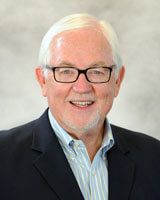 AL ERISMAN began his career at Boeing as a research mathematician in 1969 and retired in 2001 from the position of Director of Mathematics and Computing Technology. At Boeing, he was selected as a senior technical fellow in 1990. Al was executive in residence in the School of Business, Government, and Economics at Seattle Pacific University from 2001 to 2017, co-chair of the Theology of Work project (an independent, international organization dedicated to researching, writing, and distributing materials with a biblical perspective on non-church workplaces, www. theologyofwork.org), and a founding board member for KIROS (Christians in Business in the Seattle Area). He has authored multiple books (most recently The ServiceMaster Story (Hendrickson, 2020)) and numerous papers in technical and scholarly journals. He is executive editor and co-founder of Ethix magazine (www.ethix.org), and often speaks on business, technology, ethics, and theology issues around the world. Al holds a Ph.D. in applied mathematics from Iowa State University.