



A recent nationwide study by the HCU Center for Christianity in Business revealed that most Christian business leaders are serious about integrating their faith in their businesses and their daily lives. The study interviewed over 500 faith-driven business leaders, of which Christians accounted for almost nine out of ten respondents, who represented a random sample of firms from all parts of the United States.
What Christian Business Leaders Believe
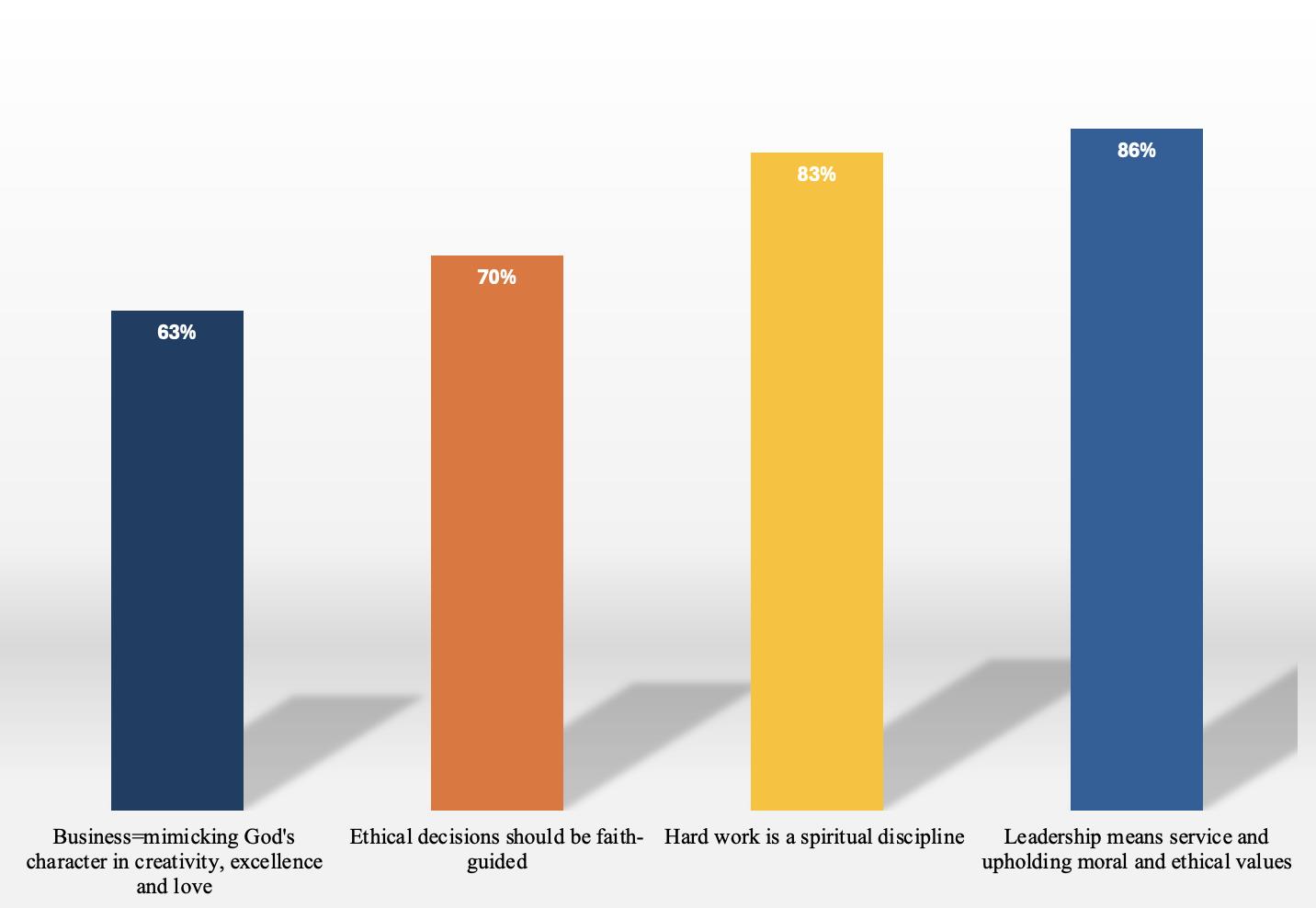
One of the most striking discoveries from the survey was that the overwhelming majority of Christian business leaders are purpose-driven and see business as part of their spiritual assignment. It was very clear that these business leaders viewed their businesses as a calling, not just a vehicle for income.Sixty-three percent (63%) of the Christian business leaders stated that their businesses should reflect God’s character in creativity, excellence, and love.The majority went on to state that the purpose of their business was to fulfill a sense of calling or higher purpose inspired by faith, beliefs, or guiding values.Eighty-three percent (86%) said that to them hard work was a spiritual discipline.
In his book, Business as Mission, author Michael Baer talks about the seamless integration of business and mission. He states that “To pursue this seamless integration, we must reject the unbiblical thinking that our lives can be compartmentalized into the sacred and secular or that business and ministry are by definition separate activities. Scripture teaches us rather to embrace the truth that all Christ’s servants have callings that are high and holy and equally pleasing to the Lord.”1 This integration was clearly evident among the Christian business leaders surveyed.
A prominent way that this integration was observed was in the values and ethics of these business leaders. Not only did they connect their work ethic to their spiritual life, but eighty-six percent (86%) stated that business leadership is about service and upholding moral and ethical values. Seventy percent (70%) emphasized that making ethical decisions according to their faith was imperative. The majority acknowledged that when culture conflicts with their Christian values they were intent on standing firm. These Christian-led companies are clearly shaped by a worldview where ethical consistency, diligence, and excellence are non-negotiable.
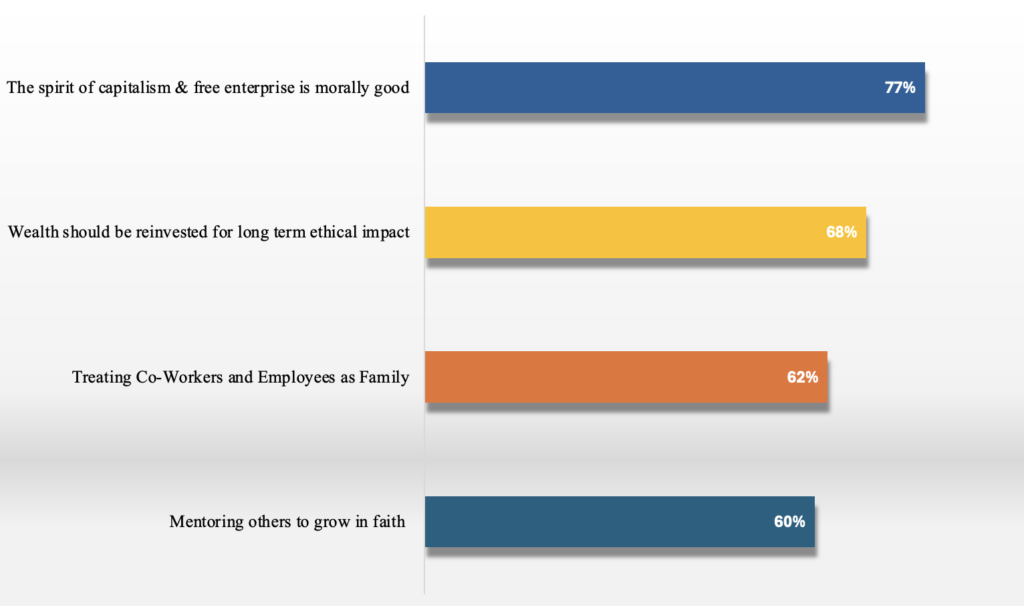
The Christian ethic was explicit in that these leaders overwhelmingly connected business to the “common good.” The belief that these business leaders were stewards of God’s blessings was evident in that the majority prioritized the common good, service, and servant leadership.Sixty-eight percent (68%) believed that wealth should be reinvested for long-term ethical impact. These Christian business leaders see themselves not merely as profit creators but as community stewards with responsibility for societal flourishing.
One of the most powerful ways that these owners integrated their faith was in their relationships. “Sixty-two percent (62%) of those surveyed expressed the importance of treating co-workers and employees as family. ” A strong majority related success to having a positive impact on stakeholders, serving the community, and offering innovative solutions to society’s needs. They also stressed the importance of company policies that would enable a proper work-life balance. “Sixty percent (60%) said that mentoring others in faith is central to their business life.” These business leaders were intentional about integrating faith into their hiring, talent development, and their strategic priorities.
It is interesting to note that Christian business leaders hold a positive moral view of capitalism and free enterprise. “Seventy-seven percent (77%) said that free enterprise is morally good.” Christian leaders generally support capitalism, entrepreneurship, and limited regulation, seeing these systems as compatible with biblical values when practiced ethically.
This aligns with the perspective expressed by theologian Wayne Grudem in his book, Business for the Glory of God. Grudem argues that the various aspects and disciplines of commerce and business are not inherently evil. Nor are they morally neutral. He contends that they are actually morally good. However, he also acknowledges that they can be tainted by sin such as dishonestly, greed, etc.
Grudem believes that the components of business provide unique opportunities for glorifying God. He states, “We will find that in every aspect of business there are multiple layers of opportunities to give glory to God, as well as multiple temptations to sin.”2
From the research at hand, we see that Christian business leaders are aligned around a historically rooted, biblically grounded model of work – one that emphasizes discipline, service, generosity, Christian charity, and moral clarity.
Now that we have gained some insight into the beliefs and values of Christian business leaders, let us turn our attention to what these Christian leaders want as they pursue their vision and calling.
What Christian Business Leaders Want
Across multiple questions in this survey business leaders acknowledged significant difficulty navigating cultural shifts, ethical challenges, and faith expression in today’s workplace. Christian business leaders feel the tension of leading faithfully in secular environments and want more resources to navigate moral gray areas. These owners are also hungry for spiritual mentoring on work-life balance and healthier rhythms in their personal lives.
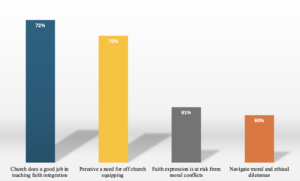
“The research revealed that sixty-one percent (61%) of Christian leaders feel that their faith expression is at risk from moral conflicts. Sixty percent (60%) indicated that they were challenged by moral and ethical dilemmas.” And while seventy-two percent (72%) believe that their church does a good job in teaching faith integration, seventy percent (70%) expressed a need for additional “off-church” equipping.”
Darren Shearer, in his book The Christ-Centered Company, states, A culture war is waging in the world today, and for-profit companies are at the center of it.3The responses in this research support that perspective.
Shearer goes on to state, Considering more than eighty-five percent (85%) of working-age people spend around sixty-five percent (65%) of their waking hours working in a for-profit company, it’s clear that the marketplace is the central battleground for competing narratives and ideologies that seek to steer a culture in a particular direction.4
The Christian business leaders in this survey clearly feel the responsibility and calling to be salt and light in a dark world. They are convinced that how they lead their companies has eternal significance, but the challenge is often intense. They want more resources and guidance as they seek to live out their calling in the marketplace.
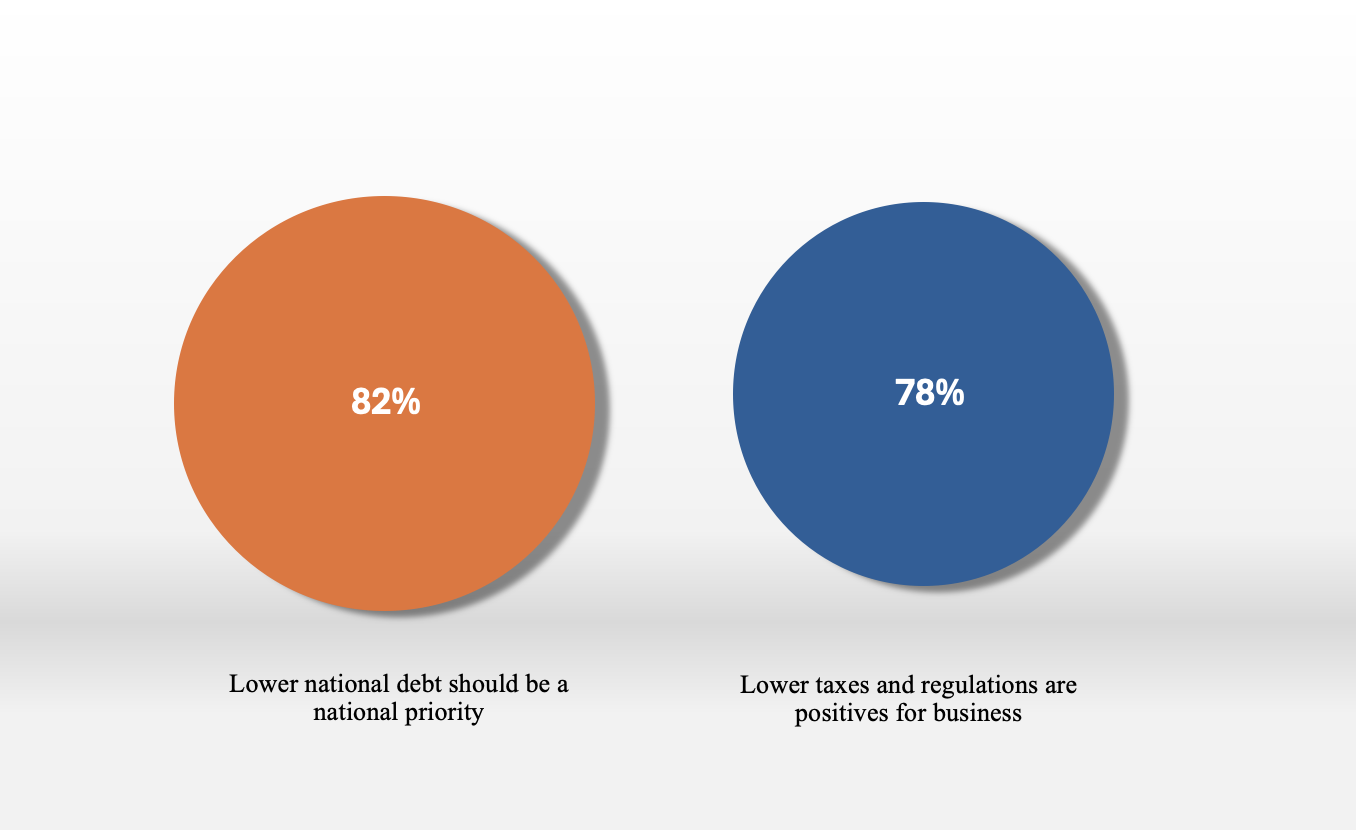
Another desire of Christian business leaders was related to public policy. The majority stated that current laws and regulations posed a challenge to their businesses and their mission. “Seventy-eight percent (78%) indicated that lower taxes and less regulation would clearly benefit business, and eighty-two percent (82%) support lower national debt as a moral and economic priority. ” Additionally, the majority also indicated that they desired policies that supported religious freedom and faith expression in the workplace. Christian business leaders want an environment where expressing biblical values is protected, not penalized.
Overall, the survey data paints a clear picture that Christian business leaders view their businesses as a spiritual calling, and they let their faith shape their ethical framework as well as their business practices. The data also shows that Christian business leaders desire stronger spiritual formation and peer support, as well as public policy to protect religious liberty. So, what can these business leaders do to help themselves?
What Christian Business Leaders Can Do
“The research indicated that seventy-four percent (74%) of these business leaders relied on spiritual practice and reflection when making leadership decisions. Sixty-three percent (63%) stated that they specifically seek guidance from God’s Word as they lead their companies.”
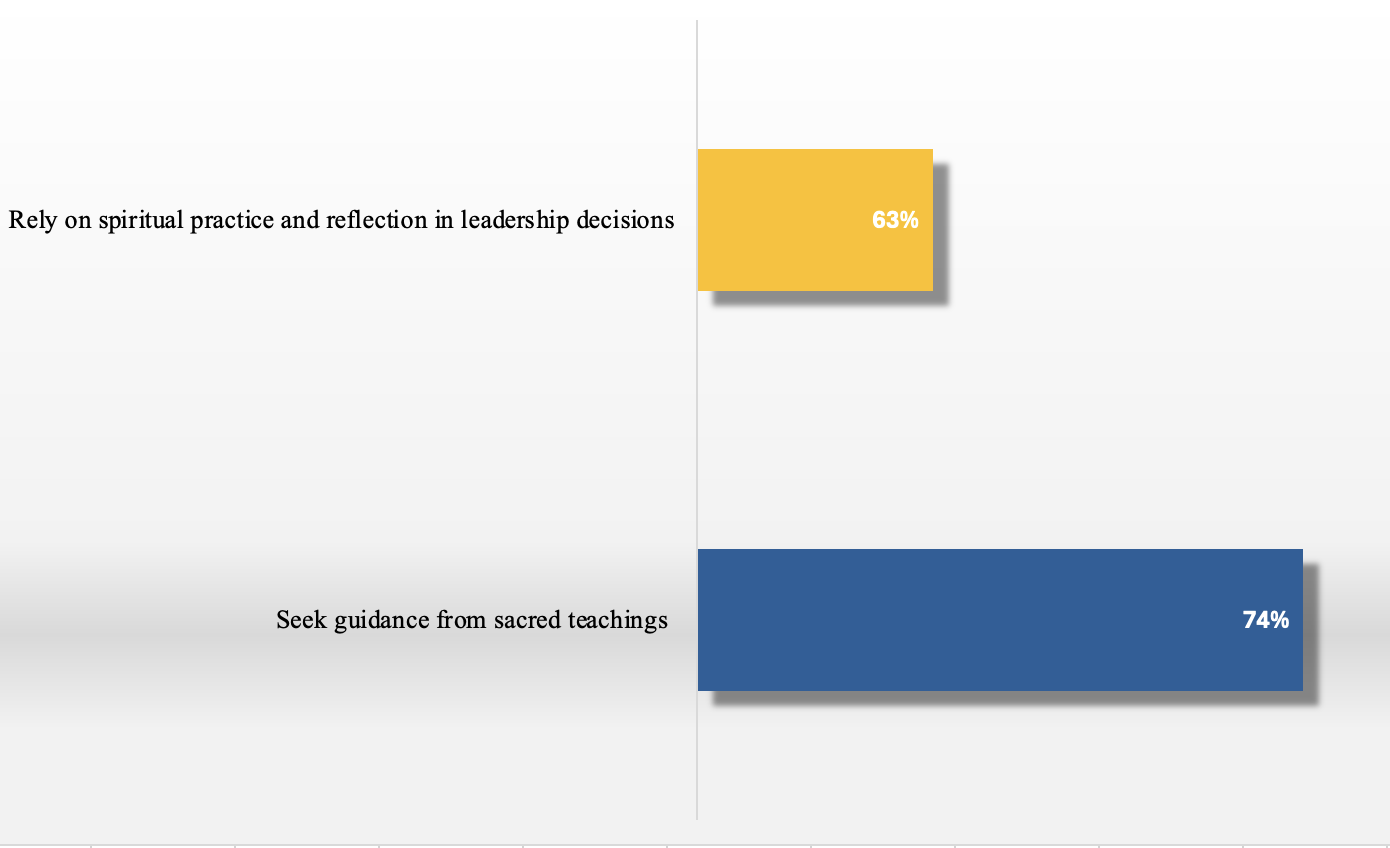
That said, one obvious action that Christian business leaders can take is to consistently and systematically study the Bible. This is the believer’s source for truth and wisdom. When facing the trials and challenges of business leadership, God gives specific instruction stating, “If any of you lacks wisdom, let him ask God, who gives generously to all without reproach, and it will be given him” (James 1:5 ESV.)
Christian business owners would find an excellent online source of training in faith-integration in CCB’s “The Habits of a Christ-Centered Company” curriculum (https://christianityinbusiness.teachable.com/p/the-habits-of-a-christ-centered-company). Other helpful sources include Business for the Glory of God by Dr. Wayne Grudem, and Business as Mission by Michael Baer (just to name a few.) Many find Christian podcasts such as “The Christian Business Leader Podcast” (https://hc.edu/center-for-christianity-in-business/podcast/) are very helpful.
Another excellent resource for Christian business leaders is national peer advisory groups such as C-12 and Convene, as well as various local Christian business groups and ministries. Many Christian business leaders find the encouragement, biblical training, and accountability of a peer group to be life-changing.
Finally, many business leaders have found that having a Christian business or executive coach is transformational. The business coach who is also capable of spiritual mentoring may be the most powerful resource for navigating the moral and ethical complexities of business in a God-honoring way. This type of one-on-one mentoring and coaching offers personalized guidance and accountability when integrating faith and business.
For more information about this ongoing research or resources to help business leaders, contact the Center for Christianity in Business at Houston Christian University at ccb@hc.edu
Contributed by Glenn Smith on behalf of HCU CCB
Notes
1Michael R. Baer, Business as Mission: The Power of Business in the Kingdom of God (Seattle, WA: YWAM Publishing, 2006), 12.
2Wayne Grudem, Business for the Glory of God: The Bible’s Teaching on the Moral Goodness of Business (Wheaton, IL: Crossway Books, 2003), 17.
3Darren Shearer, The Christ-Centered Company: 37 Biblical Business Habits to Build a Thriving Company that Honors God and Blesses the World (Houston, TX: High Bridge Books, 2023), 1.
4Ibid
Learn more about the Market Survey