


Business As Mission: A Panel Discussion
[By Rick Martinez, Ross O’Brien, Bob Reader, Darren Shrearer, Todd Stewart]
Editor’s Note
On March 27, 2026, the Center for Christianity in Business at HCU organized a panel discussion on the topic: Business as Mission, during the scheduled Spring Networking Luncheon event. The panel consists of academic and industry experts and practitioners who champion the cause of operating for profit enterprises with the explicit purpose of delivering the impact of the Great Commission and redeeming the world of commerce for the glory of God. Below is an excerpt of the discussions and is presented here to set the tone for the theme of the current CBR issue.
Discussion Panelists

Rick Martinez (moderator) is Professor of Entrepreneurship and Chair of Business Administration at Dallas Baptist University. He has served in numerous administrative posts in Christian Higher Education and published extensively in the areas of management and faith-work integration. He is the recipient of the 2020 Sharon Johnson Award from the Christian Business Faculty Association. Prior to his academic career, he spent six years in the U.S. Navy operating nuclear power plants on surface ships. Rick and his wife, Peggy, live in Fort Worth, TX.

Ross O’Brien is Professor of Management and Program Director of the MBA and MSM programs at Dallas Baptist University. Prior to academia, he ran an Internet services firm in Birmingham, AL., after working for AT&T’s Business Network Sales division as an Account Executive. He began the undergraduate entrepreneurship program as well as the Center for Business as Mission at DBU. He also pioneered the Patriot Angel Network, an angel investment network and served on the Board of Beyond Angels. Ross holds a Ph.D. in business administration from the University of Texas at Arlington and an MBA from Dallas Baptist University. Ross and his wife Lisa live in Waxahachie, TX. where Lisa runs their bookshop, O’Brien’s Bookshop.

Bob Reader is an Assistant Professor of Entrepreneurship at Dallas Baptist University. He comes to DBU with 30 years of business experience, where he has been able to use his science, business, and law backgrounds to co-found six technology startup companies and coach a couple dozen more. He has a passion for world missions and founded Emerging Fields in 2019, a 501c3 nonprofit that applies donated funds to build for-profit businesses, with a stated mission of spreading the gospel among the least reached nations. He and his wife, Mary, have eight kids, four of whom are still at home.
 Darren Shearer is the founder and CEO of High Bridge Books and Media, which helps Christ-centered authors and organizations publish stories that glorify God in all spheres of culture, with now over 200 books in publication. He is also host of the Christian Business Leader Podcast, which, with 200+ episodes to-date and reaching over 160 countries, relate testimonies of faith-driven business leaders. Darren is the author of three books for marketplace Christians, including his latest: The Christ-Centered Company: 37 Biblical Business Habits to Build a Thriving Company That Honors God and Blesses the World (2023). A former Captain in the USAF, Darren holds a MA in Practical Theology (Regent University), an MBA (Pace University), and a BA in English (Charleston Southern University). Darren and his wife, Marie, reside in the Great Smoky Mountains of Western North Carolina with their three young boys.
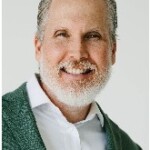
Todd Stewart is former CEO of Gulf Winds, a Houston (TX) based warehousing and freight transportation company founded by his father. The success of the business allowed him to form his own family foundation, Hope Legacy Collective, which is purposed to support Kingdom-centered organizations and people that make a measurable impact and bring hope to the world. An active participant in the C12 Christian executive peer learning community, he has been honored by C12 with the Hero Award and by International Cooperating Ministries with the Rock Award. Todd has steered the company on the motto: faith first-and profit followed, and his testimonies are captured in his recent book: Delivering Hope (2025). Todd graduated from Stephen F. Austin State University with a bachelor’s degree in marketing and resides with his wife in Houston, TX.
Discussion
Rick: A business career is not a job; it’s a lifetime of ministry that we’re being called into. For some, they are called into business as a mission, others to live a life of ministry in the marketplace, or business as a ministry. Both are known as BAM. What differences are there between the two?
Ross: Business as Mission is a term that’s batted around a lot. Back in 2021, I ended up in the hospital for nine days. I got to interact with paramedics, ER nurses, doctors, and other care providers who made up what is known as health care. Everyone involved had gifts, training and roles that are unique. That’s how I think of Kingdom business, where everyone involved served a role in ministry. Business as mission, on the other hand, is more intentional, with enterprising ventures leveraging financial success for the purpose of disciple-making or church planting, especially in the least reached parts of the world.
Bob: For a lot of people, the easiest way to think about Business as Mission is to tithe off from the profit of the business. You are going to build the best business you can so that you can give ten or whatever percent to the church or to the ministry. But let’s pause and ask, who owns the earth and everything in it? Of course, God does. So, if your mission is to make money, God already has a full claim on it. Thus it is not about making money, and it is not about cash flow. Yes, to be sure, you’ve got to run your business with excellence. But there’s got to be more to it than just making money so that we can tithe from the profit.
Todd: I wrote this book called Delivering Hope. It tells stories, my own encounters, of what happened over thirty years when we ran our business for the glory of God. I came to faith two years into my working journey, helping out in a really small trucking, warehousing company that my dad founded with his 401K savings at age 51. Being saved meant I started to see people differently. I started to care about others and eager to share the same grace and mercy I received through Christ so people can get saved. That became the driving force in my life. Just this week I got an email from a lady whom I came to know 30 years ago. I was new in the business and I made a sales call on her up in Dallas. I remember praying and asking God to help me enter into a faith-centered conversation. In her recent email she said, Todd, I cried when I saw your new book mentioning our lunch so many years ago. You talked to me about the Lord and you taught me about Jesus! Finding Jesus means a heart change. All of a sudden, you want to run your business for the glory of God. I didn’t know I was doing BAM then. That word wasn’t even out there.
Ross: Wade Myers is a venture capitalist and entrepreneur. He’s done some calculations. He looked at the potential impact, of a pastor compared to a leader of business who is a follower of Christ, on those who are not believers within a community. Compared to the pastor, he found that business leaders had 8,600 times the potential impact on the unsaved. If you think about those who go to church, maybe five percent are not believers. The amount of time that they spend interacting with the pastor could just be, fifteen, twenty, or thirty minutes every week. A business leader, on the other hand, is engaging forty, fifty, or even sixty hours a week with non-believers who could make up well over fifty percent of those in the workplace. Business leaders just have such amazing opportunities to advance the Kingdom right where they are.
Darren: I got into this broader faith and work movement about twenty years ago when I was in the Air Force. I was leaving the Air Base one day after work to go do some volunteer work through my local church, because that was my paradigm for what ministry meant. And I’ll never forget, on this particular day, the Lord spoke to my heart and said, this Base IS your ministry. That was the paradigm shift for me about ministry – that ministry happens where I spent most of my waking hours. The BAM movement, as I understand it, recognizes that most people aren’t church goers. Christians thus have a responsibility to reach people in the workplace because that is where they spend most of their time. The Creation Mandate (Genesis 1: 28-29) emphasizes the intrinsic value of work, because work was created before the Fall. Work needs to be redeemed, yes, but the Great Commission is the mandate to go win souls. BAM is the evangelistic aspect of what we do every day, and I’m convinced that our primary mission in business is to make disciples. To do that, business has to be much more than a covert place for evangelism or just a way to make money to give to churches. It’s fundamentally about making disciples.
Rick: This is a perfect lead into our next question: What business related problems arise when a BAM business engages in disciple making activities?
Bob: I was once teaching patent law in northern India where they have these anti-conversion laws that could put you behind bars for fifteen years if you proselytize. So, if you embrace Jesus in the workplace, are you going to have problems? You might. But now I am at Dallas Baptist, I tell my students that if you honor God in the workplace, he’s going to honor you. Could you get fired? Yeah. Does He have something better? Most definitely. I know people at Google and Apple who are involved in Bible studies. No, it’s not the majority, and they probably get harassed, but it is happening. There are faithful people in all types of business. Despite stumbling blocks, we are still called to do what Jesus wants.
Todd: For thirty years our company was a pretty big operation in Houston, with terminals in Dallas, Memphis and Mobile. It helped us attract great people. Once, I got sued, and it was from a Christian, a lady who worked for me for many years. We paid for her boys to go to college. She would call me and ask for prayers for her people. She was a leader in our organization, so it was like being betrayed when we were sued. We worked with big businesses such as Home Depot, and the worst thing we could do is if we don’t work hard or don’t do our job well. By choosing to serve the Lord in what we do, we were able to bring many people to Christ. There’s always a risk, of course. Once I befriended a guy who was the president of a large company here in Houston. He was not a believer and would constantly curse. That was certainly not the culture of our organization. But for some reason, this guy took a liking to me. He liked our business. We had a similar golf game. I got to share Christ with him on the golf course. As much as it pained me when he called me to play golf, I looked at it as an opportunity from a faith perspective. Lost people do lost things. We must be willing to be in the world, but not of the world.
Ross: In Cal Newport’s book, So Good They Can’t Ignore You, we are reminded, as followers of Jesus, that we do need to strive to be so good at what we do, so that we can represent Christ really well in the workplace. Being strategic and intentional, we need to see how God has gifted and called us. Forty percent of the world’s population has never heard the gospel, and missionaries can’t go where businesspeople can. A friend of mine has started thirty plus businesses in China and Eastern Europe, in places where there is little or no presence of churches. He’s also careful about what industries he got into because there is a lot of corruption in these places. He wanted to be able to run the businesses with integrity. Moreover, he is intentional about the kinds of businesses he starts, not those where the believers just sit in front of the computer all day long. Instead, workers must engage with others on the manufacturing floor where they work. He is also intentional in making a difference in the supply chain, quality control, human resources, and management so that he can exemplify the character of a true follower of Jesus.
Darren: I also think that discipleship is about more than just sitting down for coffee once a week and doing a Bible study. We’re discipled more by the cultures and subcultures, or what the Bible calls the spirit of the age. Companies are fundamentally marketing cultures, not just products or services, and it is cultures that make disciples. As influencers, our habits make the culture. On Amazon.com you see books about the HP way, the Disney way, etc., just as the young Jesus movement was called the Way in the New Testament! The defining habits of a group of people (customers or workers) would come through the products, services, and the quality of those products and services associated with the group. As Todd mentioned, every company has its distinctive preferences for hiring, operation styles, policies, charity, etc. These are all cultural expressions. A disciple is but one who has adopted the habits of a culture. There is no more critical question to answer than this: if disciples are not influenced by the culture of where they spend almost all of their waking hours for Christ, where are they going to get it?
Bob: Let me add that making disciples is also about loving your neighbor. About twelve years ago, I was invited to Laos, a country in Indochina, by the underground church. This is a country where Christianity was basically forbidden. The Laotian Christians asked the question: how are we going to turn our nation into a South Korea, where a population with two percent Christians grew to become seventy, eighty, and ninety percent? They quickly realized that the vast majority of Laotians are poor rice farmers, living out in the mountains, and represented by as many as a hundred fifty or sixty unique people groups. They came up with the brilliant idea of converting the rice farmers into corn farmers. But for that to work, you need grain drying facilities for the corn. Long story short, the business mission we were associated with ended up building the nation’s largest network of grain drying facilities. The farmers would sell them the corn, which would be dried and milled into feed for hungry pigs. Incidentally, that solved the protein problem of the country which was one of the most malnourished on Earth. The guy buying all the corn in the villages was a trained church planter. As a result, tens of thousands of poor farmers are reached for the gospel and many new churches have been planted! So, yes, we were disciple making. We were also building a business. More importantly we were loving our neighbors who are now no longer living under abject poverty. They are not selling their daughters on the weekends to bring in extra cash. You got to love your neighbor while making disciples.
Todd: I want to thread this needle between Business as Mission and Business as Ministry a bit with a testimony. God has gifted me with this opportunity to run a business at a high level and I would be okay with giving away most of the profit. Yet I have all these people, our employees and their families, who are literally leaning on us for their livelihood. We did a companywide survey to see how engaged our employees were. I was one hundred percent engaged myself but our workers came in lower than what I expected, at something like fifty-two percent. In my zeal to execute that Great Commission at a high level, I had to take a step back and say let’s look at our people, like what are the things that they are passionate about. We modified our program and the engagement scores shot up to seventy percent in six months. That was because we took the time to really focus on our team members. Ministry or mission, you can’t have one or the other. It’s got to be both.
Rick: Why is that business and commerce are such a foundational element in living out the Great Commission, making disciples and loving our neighbor?
Darren: I love a quote by Oswald Chambers. He said that spiritual truth is learned through the atmosphere that surrounds us, not through intellectual reasoning. What people need more of to grow in Christ is not necessarily more Christian content, but it’s an atmosphere that surrounds them. The workplace constitutes the atmosphere, the culture, where most people get exposed to much of their lives.
Ross: In centuries past, the institution(s) that had the greatest impact on the community would have been the government or perhaps the church. The market, however, is the driving force in the world today. The marketplace offers perhaps the greatest opportunity to represent Christ and to have an impact in modern time. In the Parable of the Talents (Mt. 25:14-30), two of the servants proactively invested the talents they received, much like the entrepreneurs of today who must proactively identify problems, opportunities, leverages, etc., in order to create more. We are co-laborers with God. Jesus is in the business of redeeming the world. We therefore must take part in this family business, which is restoring Creation.
Bob: I think God will redeem all institutions, whether it is the government, the family, or the church, in His own way. The marketplace is where God has called us and it is where we will need to have an impact for the Kingdom. How do we get into Laos, or China, or the Maldives, where the gospel needs access? It’s an access question. Business folks have access, and just as in Laos, they have impact – a good one – for God’s Kingdom. Business folks went in there to revive the economy and were being celebrated, honored, all the while when the communities were reached for Christ.
Todd: I used to be a part of C12, a Christian CEO peer learning community. This community, and others like it, is expanding rapidly. There were seven groups in Houston when I started twelve years ago, and now there are more than a hundred just in Houston. God is moving in the marketplace. Billy Graham said that business would be the spot where the next revival happened. We did a little exercise each year at C12 just to remind one another of the opportunity and impact that we have as business leaders. Take my company as an example. Let’s say we had two hundred fifty team members and five hundred drivers, plus perhaps one hundred fifty vendors. Now how many people do these people touch every day, knowing that we had three million moves a year? All of a sudden, our little logistics company in Houston could reach millions of people every year. Do this exercise with your company and you’ll realize very quickly the opportunity that you have in the marketplace for the Kingdom. Jamie Hampton, the young fellow who now runs our Foundation, had set his sight on being a missionary out of college. By chance he sat across from me, and I said, I want you to reach people for Christ in our company. He had thought that was not possible being in the marketplace, but after our conversation he went home, told his wife and was joyful. Don’t believe what you see or hear on the news. Keep your eyes on Christ. God is moving, and it’s a powerful movement.