 Dr. Philip Tallon is an Assistant Professor of Theology, Chair of the Department of Apologetics, and Director of Graduate Programs for the School of Christian Thought at HCU. He eared his BA in British and American Literature from the University of South Florida, his MA in Theology from Asbury Theological Seminary, and his PhD in Theology from the University of St. Andrews.
What are some aspects of the Honors College program that you find unique? What is your favorite thing about the Honors College curriculum?
“What follows is just a long-winded way of saying, ‘great books.’ And here goes. Even before I came here to the Honors College my educational philosophy centered around the idea that the best thing a teacher can do is press good books into the hands of students and then hold their feet to the fire until they read them. Maybe that sounds a bit harsh. The nicer way to put that would be that most of us need help to achieve our best, and one of the best things for us is to read big, important, challenging books that have stood the test of time.
 “As for my favorite thing, I suppose ‘the students’ is the easy answer. But in this case it’s also conveniently the true answer. Each Honors instructor here is assigned mentees that will likely stay with them for 3 years. You really get to know students in that time. I enjoy seeing real growth from students that I don’t think I would observe if I just had them for a semester. I had a student recently who came in barely able to write at a college level, and at the end of his time here one of his essays was held up as a model essay. Without continual attention over a longer period of time (and not just from me, but from his Honors writing instructors as well), I don’t think that would have happened without continual attention. The standard college experience does some things well, but mentoring isn’t one of them. Unless a student intentionally builds a relationship with a professor, they can slinker through college basically unseen. The Honors College is designed in such a way so that doesn’t happen. Every student is important.”
You have authored and coauthored several books. What is your primary motivation for writing and publishing your work?
“Well, it’s certainly not the money. Most of my books have followed the typical academic pattern of ‘big words, small print, smaller sales.’ But it’s still rewarding to write. I don’t know how other people think of their work, but I tend to think about writing much like my father thinks about carpentry. When he sees the need for something and has some spare time that’s what he does, he makes things out of wood. I guess books are made of wood as well so maybe they count as a very nerdy form of carpentry. Anyway, the point of the analogy is that I typically just look around for some gap in the literature that I think I can fill. Sometimes this is more academic, as in the case of my book on theological aesthetics and the problem of evil or my recent essay on the theistic argument from beauty. In both cases it just seemed like there was an empty spot on the map that could be filled in. My work tends to be more constructive than anything else. Some scholars really focus on defending certain territory, but I’m probably more interested in exploring neglected areas.
“I suppose there’s one more thing that could be said about scholarly writing in general, which is connected to the educational philosophy of the Honors College. In our program, we really push students to explore the text alongside us, sometimes without resolving for them key questions raised by the text. This can be tough at first, because some students are used to teachers telling them what the right answer is, and then making sure that answer is on the final exam. But we prefer to allow the conversation in the classroom to struggle toward the truth so that when student arrive at their conclusion they have explored every step of the way toward that conclusion. Just knowing the right answer isn’t enough, you have to have good reasons for why your answer is right. And struggling toward understanding together helps with that. One thing that students sometimes don’t understand is that in almost every area of higher study there are unresolved questions or disputed positions. The scholarly literature itself is a kind of ongoing conversation where we wrestle with the truth. Teaching students how to have meaningful conversations and real dispute as they struggle with the text is actually good preparation for higher study.”
What have you written recently?
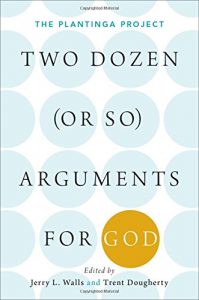
“I just had an essay appear in a book called Two Dozen (or so) Arguments for God, which was published by Oxford UP. It’s a great volume with a lot of big names in it, and a few little guys like me. The book explores a really wide range of arguments for God’s existence. Some of the arguments in the book are real classics, like the argument from design, but there are also some odd ones, like the argument from beauty and the argument from play, both of which I wrote about. These are more uncommon arguments that I think readers will find interesting at the very least, and perhaps even compelling! For anyone who is interested in theistic arguments, though, this book is a must-have.”
Of the current literature on the Honors College reading list, which text speaks to you the most? Which book are you most excited for students to engage with?
“Well, the most exciting books aren’t always the most important. I continue to find Aristotle to be the most observant man in the ancient world. He’s not always right, but he sees some things so clearly that it’s hard to improve on his insights. One of these things is the nature of virtue, which he spends a lot of time talking about in his book on ethics, which we read. Once you read Aristotle on virtue it rewires your brain in a helpful way and you can just see human nature a lot more clearly; not only what’s wrong with us, but also what it really looks like to be a well-formed person. I think it’s important for students to get a clear picture of what virtue is–a trained habit of being that’s in accordance with reason. Sometimes we foolishly think as if we had a finite amount of good and bad in us, and when we make bad choices we kind of get the bad ‘out of our system.’ But in reality the more we do something–good or bad– the more natural it becomes. So repeated actions are the way we get things ‘into’ our system. Our actions shape our habits, which shape our character, which shapes our destiny. Aristotle helps to show us that. Of course, Aristotle isn’t just floating out there on his own, much of his teaching has been picked up by Christian theology as well, so that if you read Aquinas or C. S. Lewis on virtue, you wind up hearing a lot of Aristotle’s influence.
“I also really like leading discussions on Chesterton’s The Man Who Was Thursday and also pretty much any book where somebody carries a sword.”


 Sophie Seehausen graduated from HCU in 2016 with a BBA and MACT. Since graduating, she has worked at LBB & Associates Ltd., LLP as an auditor. She was promoted to Senior Auditor in August 2018, ahead of schedule. In addition to her professional accomplishments, Sophie and her husband, Daniel Seehausen (also an Honors College graduate) have welcomed baby Andrew Eliot Seehausen (Ender for short) into their budding family. In her spare time, Sophie enjoys reading and traveling. She also enjoys helping her sister-in-law care for her foster children.
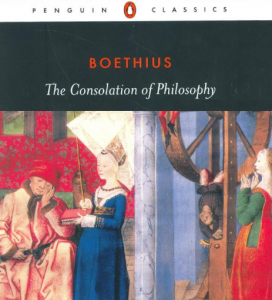 “It is difficult to stand between the decay of an old civilization, with all of its uncertainties. But the way we meet it has much to do with what we leave for future generations. That is Boethius’ (477—524 AD) position as he faces the death throes of his beloved Rome, but working frantically to salvage as much of it as he can for a new people and a new era. A prolific philosopher and theologian, he wrote his last and most enduring work, the Consolation of Philosophy, from prison, awaiting a brutal execution. Little did he know that seven hundred years later, his prison classic, in addition to his other works, would be responsible for inspiring the foundation of universities. Boethius’ Consolation provides an organic point of union between the words of Greco-Roman antiquity and the Middle Ages.” —Dr. Robert Thomas Llizo, Honors College Professor