 First, introduce yourself! You are new to the Honors College faculty rotation. Which other department(s) do you teach in? What other leadership position(s) do you hold on campus?
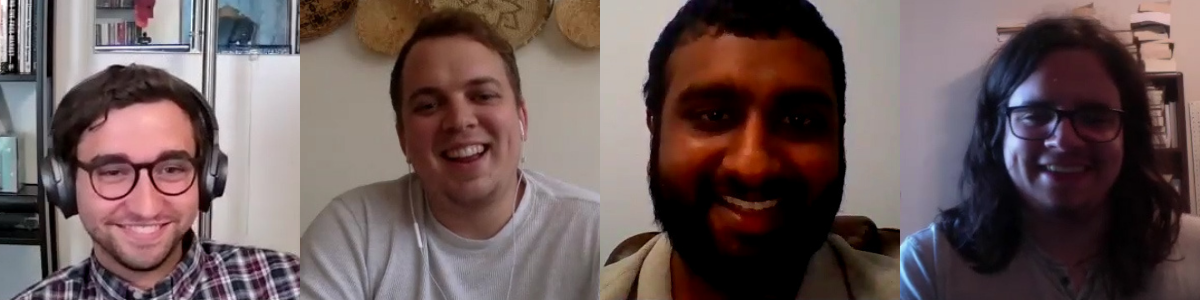
This is my twenty-second year at HCU. I teach political science. My interest are in the American founding, Constitutional history, and American politics. I am the director of the Morris Family Center for Law and Liberty at HCU. The mission of the center is to promote an understanding and appreciation of American history and our nation’s founding principles. In a normal school year, we host extracurricular activities for students such as faculty lectures and book groups. I’ve even taken students to Boston, Colonial Williamsburg, Yorktown, and Jamestown. This year has made travel more difficult, but I hope to do more in the future. Philadelphia is next on our list! I have been a graduate program director, department chair, and dean. I enjoy teaching much more than administration.
Can you remember what first sparked your interest in government and history?
I can narrow it down to a specific date—May 28, 1977. I was seven years old. My parents went to a movie the night before and came back and told me they were going to take me to see a movie the next day. They said it was a movie with “space pirates and laser swords.” It was, of course, Star Wars. The original Star Wars. None of those terrible prequels or sequels. After the movie I asked my dad to explain the difference between an empire and a republic. That investigation led me to a fascination with Roman history, British history, and of course the American founding. And I still like Star Wars! Its my favorite movie and was a big part of my life growing up.
Why did you decide to become a professor?
I considered law briefly, but discovered that I really liked studying law rather than practicing it. More importantly, I discovered that I’m not a very adversarial person. In some sense I felt that litigation is the source of social breakdown. It was probably from growing up in a small town. Conflict was something you worked out with people rather than taking them to court. The law can be a noble career, but it just wasn’t for me. I really liked reading books, discussing ideas, and applying those to current events. Both of my parents were school teachers, so I guess it runs in the family. My real dilemma was whether I wanted to teach history or political science. I sort of split the difference and focused on political history. I still had to take four semester of advanced statistics in graduate school though!
Describe your teaching philosophy.
It depends on the class. For lower level classes, I think there is a place for good lectures to introduce concepts and the importance of a discipline. I enjoy teaching freshman government to students who don’t want to be there. Usually at the end they’ll tell me they learned a great deal, but more important to me, they’ve developed an appreciation for the study of politics. I always tell them that politics is the master science. That’s what Aristotle says anyway. Before we have time for science or literature or business, we have to learn how to live together. That’s the real challenge of humanity. For my upper-division course, I prefer focusing on texts and discussing them in class together, and figuring out why and how they are relevant today. Many of the books I’ve been teaching in my political science classes are already on the Honors College reading list so I feel very comfortable in that environment.
 Do you have any current research interests?
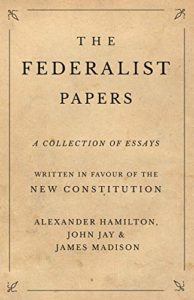
I’m working on a book about the Federalist Papers. It’s really aimed at a high school/college student level. I attempt to explain the significance of the work and then provide brief synopses of all eighty-five Federalist essays. I tend to bounce around in my research areas. My main focus over the years has been on the history and importance of American state constitutions. Many people, including teachers and historians, often forget that the American state constitutions existed about a dozen years prior to the United States Constitution. There is a tremendous amount that can be learned from reading all those old state constitutions. In fact, in our nation’s history the American states have produced 145 state constitutions. This is because they sometimes replace an old one with a new one. I’ve read all of them. Its really like a diary of the American experience in constitutionalism.
What do you enjoy most about the Honors College curriculum and teaching model?
Getting an opportunity to explore a book with a student. That’s really what college should be. While survey classes still have an important role to play, an increasing amount of information is available online. There are some great educational videos on YouTube on every topic you can imagine. For students who need guided study, having a college professor lay out learning objectives, a reading list, and providing great lectures can be very helpful. However, it’s a bit like having a coach at the gym. The reality is you could do much of it yourself with a little planning and effort. Really to get the most out of an education, you should read great books, discuss them with others, struggle with ideas, and write a whole lot of essays. Its not only the ability to speak intelligently about the works you read, but the ability to synthesize ideas, to come up with solutions, and to articulate those ideas. With the right education—like the Honors College model—you are a different person when you leave. It’s not just about passing tests and getting grades.
Which was your favorite text to teach this semester in the Honors College and why?
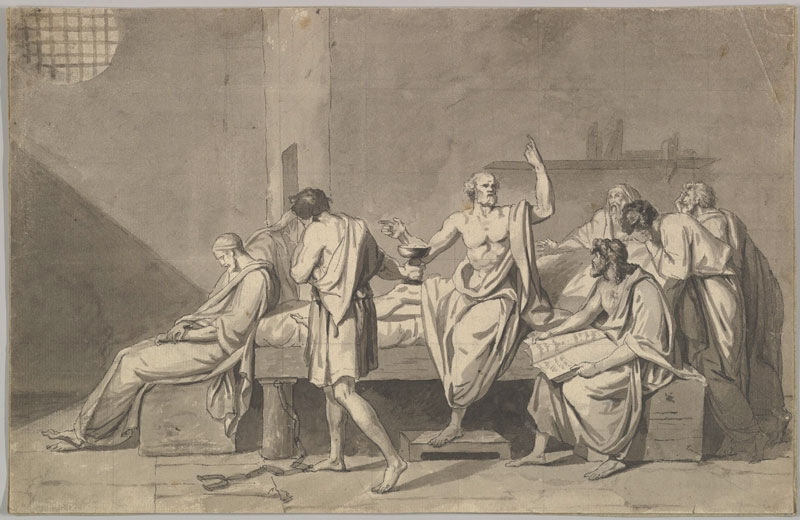
Its difficult to pick because Dr. Hartenburg allowed me to focus on several that are classics in political history. This semester, I enjoyed Thucydides the most. I hadn’t looked at it in several years. I had forgotten how lively it is, and how relevant as well. And it presents these classic dilemmas that we still struggle with today regarding justice and the use of power. We also forget that the Peloponnesian War provides the backdrop for so much else that is written during that classic Greek age. The Athenians are questioning their very way of life and understanding of the universe. Thucydides presents the backdrop for understanding all of that. It reminds me of a nation that questions its greatness and place in the world.
Have you picked up any hobbies this year in light of the pandemic?
I took classical piano lessons for ten years and stopped about five years ago. I started practicing again, though I could never get past the Advanced Intermediate level of piano. I’m okay with that. I’ve discovered that I really just want to play showtunes, but I don’t have to skill to improvise enough to make it sound pretty. If it’s not on the sheet music, I can’t make it up. I’d probably better stick with Bach.
Do you have any words of encouragement for students as they head into Christmas break?
Let’s all take a break. I sometimes feel pressure to make use of all my time in a manner that is productive. I should be reading something important. I should be practicing piano. I should be exercising. It’s equally important to make time for relaxation. You have to recharge your batteries. Sometimes I intentionally say to myself, “For the next two weeks I will do nothing.” That usually means just watching movies or piddling around the house. Trying to play Elton John on the piano. You need some time to let your brain rest so you can start fresh again later.
What are you most excited about in the upcoming semester?
I’m hopeful we’ll get past this virus soon, though I don’t think that will happen in the spring. I’m looking forward to seeing students in classes. I think I’m slated to give a lecture on the Federalist Papers for the Honors College. I look forward to that because it’s a labor of love.