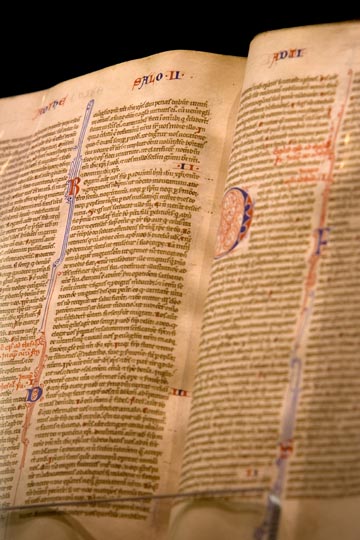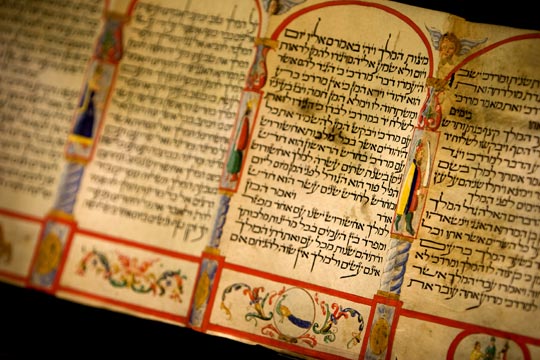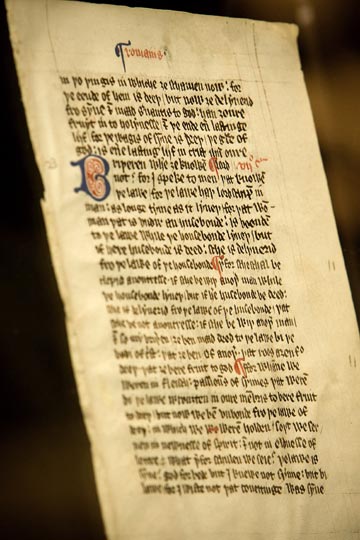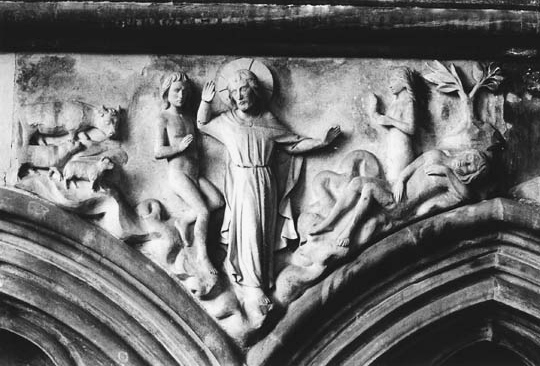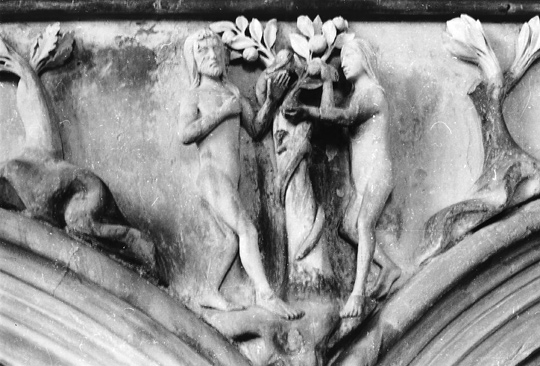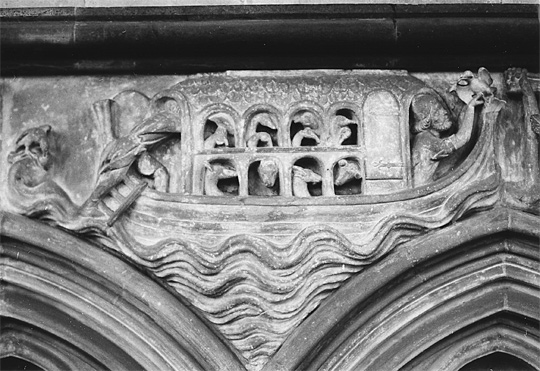

In the fifth century, St. Jerome translated the Bible into the common Latin spoken throughout the Roman Empire. This was the Vulgate or common translation. Monks and nuns in monasteries carefully copied the Bible, often taking several years to complete one manuscript. The work of the scribe was done in the monastery’s scriptorium. Many Bible manuscripts were illuminated with gold, reflecting the great value placed on the sacred Scripture (Technically, an illuminated manuscript is one with decorative gold or silver, not simply color). One scribe penned the text, leaving space for other scribes to add decorative art and rubrication, or red lettering. Bibles were expensive, and even the educated or wealthy rarely saw one. People’s knowledge of the Bible often came through the paintings, carvings, and stained glass windows of the medieval cathedrals.
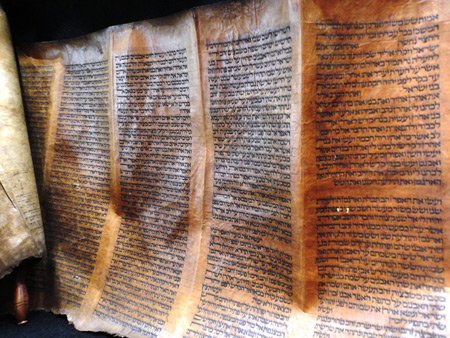 This Scroll of Exodus is from the